Buy brazilyellowpages.com ?
We are moving the project
brazilyellowpages.com .
Are you interested in purchasing the domain
brazilyellowpages.com ?
domain@kv-gmbh.de · 0541-91531010
Buy brazilyellowpages.com ?
Are genetically modified enzymes the same as synthetic enzymes?
Genetically modified enzymes and synthetic enzymes are not the same. Genetically modified enzymes are produced by altering the genetic material of an organism, such as bacteria or yeast, to produce a specific enzyme. Synthetic enzymes, on the other hand, are created through chemical synthesis in a laboratory. While both types of enzymes can be used for various industrial and scientific applications, they are produced through different methods and have different origins. **
What are enzymes?
Enzymes are biological molecules that act as catalysts to speed up chemical reactions in living organisms. They are typically proteins that bind to specific molecules, called substrates, and help to convert them into different molecules. Enzymes are essential for various biological processes, such as digestion, metabolism, and cellular signaling. They are highly specific in their actions and can be regulated to control the rate of reactions in the body. **
Similar search terms for - Enzymes
Top-Angebote
Products related to - Enzymes:
-
Talika Bio Enzymes Brightening Sheet Mask 1 un.A skin-care product for dark spots and uneven skin tone. Is your skin is dull, also presenting dark spots?. Th e biocelulose mask adheres to your face like a second skin. Also, the fabric retains a large amount of active ingredients, optimizing their distribution on the skin. It's formulation contains niacinamide (vitamin B3), chamomile and aloe vera.7,46 £*Shipping: 5,34 £Secure redirect to the provider
-
Upcircle Powder To Foam Face Wash With Willow Bark and Papaya EnzymesExperience a refreshing and radiant complexion with the Upcircle Powder To Foam Face Wash With Willow Bark and Papaya Enzymes. This innovative, water-activated cleanser features a non-stripping, soap-free formula designed to cleanse and gently exfoliate the skin. Each bottle provides up to 200 uses, offering a lightweight yet highly effective solution for a daily skincare routine. Skin is left feeling balanced, revitalized, and smooth after every use.The 97% natural formulation is enriched with upcycled rice lees and willow bark to refine texture and even out skin tone. Papaya enzymes provide a light polishing effect, lifting away dead skin cells and daily impurities to reveal a brighter appearance. This vegan and cruelty-free product is made in South Korea and comes in a recyclable glass bottle, making it an ideal choice for those seeking sustainable beauty options.Suitable for all skin types, including sensitive skin, this cleanser is simple to use. Dispense a small amount into wet hands and add water to create a soft, luxurious foam. Gently massage the foam into the skin and rinse thoroughly for a clean, refreshed finish.Key BenefitsCleanses and gently exfoliates without stripping the skin using a soap-free, 97% natural formula that leaves the complexion refreshed and radiant - Smooths and evens skin tone with upcycled rice lees, willow bark, and papaya enzymes that lift dead skin cells and daily impurities - Offers a sustainable and long-lasting skincare solution with up to 200 uses per recyclable glass bottle of this vegan and cruelty-free cleanserIngredients:97% Natural Ingredients: Zea Mays (Corn) Starch, Sodium Cocoyl Isethionate, Sodium Lauroyl Glutamate, Diglycerin, Oryza Sativa (Rice) Lees Extract, Salix Alba (Willow) Bark Extract, Oryza Sativa (Rice) Powder, Camellia Sinensis Leaf Powder, Centella Asiatica Leaf/Stem Powder, Chamomilla Recutita (Matricaria) Flower Extract, Allantoin, Papain, Panthenol, Maltodextrin, Glucose, Glycerin, Aqua (Water), 1,2-Hexanediol.17,59 £*Shipping: 2,95 £Secure redirect to the provider
-
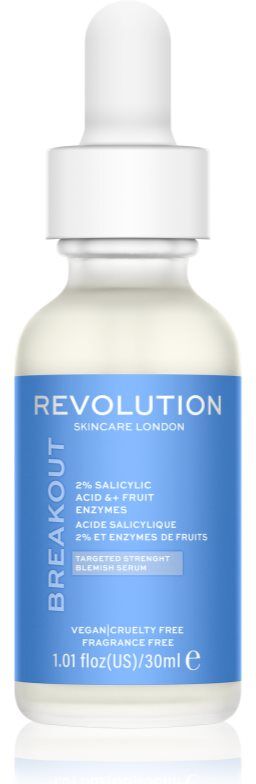
Revolution Skincare Super Salicylic 2% Salicylic Acid & Fruit Enzymes regenerating serum for oily and problematic skin 30 mlRevolution Skincare Super Salicylic 2% Salicylic Acid & Fruit Enzymes, 30 ml, Skin Serums for Women, Does it feel as though your skin needs something more than just the care provided by a cream? The Revolution Skincare Super Salicylic 2% Salicylic Acid & Fruit Enzymes facial serum is the perfect product to enrich your skincare routine – it pampers the skin and delivers an intensive treatment. With its high concentration of active ingredients, the effect it has on your skin is far more pronounced and faster than with a face cream. Its liquid consistency makes application easier, as it is absorbed into the skin very well. Characteristics: evens skin tone protects skin regenerates the skin and prevents irritation Ingredients: vegan product How to use: Dab an appropriate amount of the serum gently into clean skin with your fingertips. Apply to the face, neck and chest.9,86 £*Shipping: 3,99 £Secure redirect to the provider
-
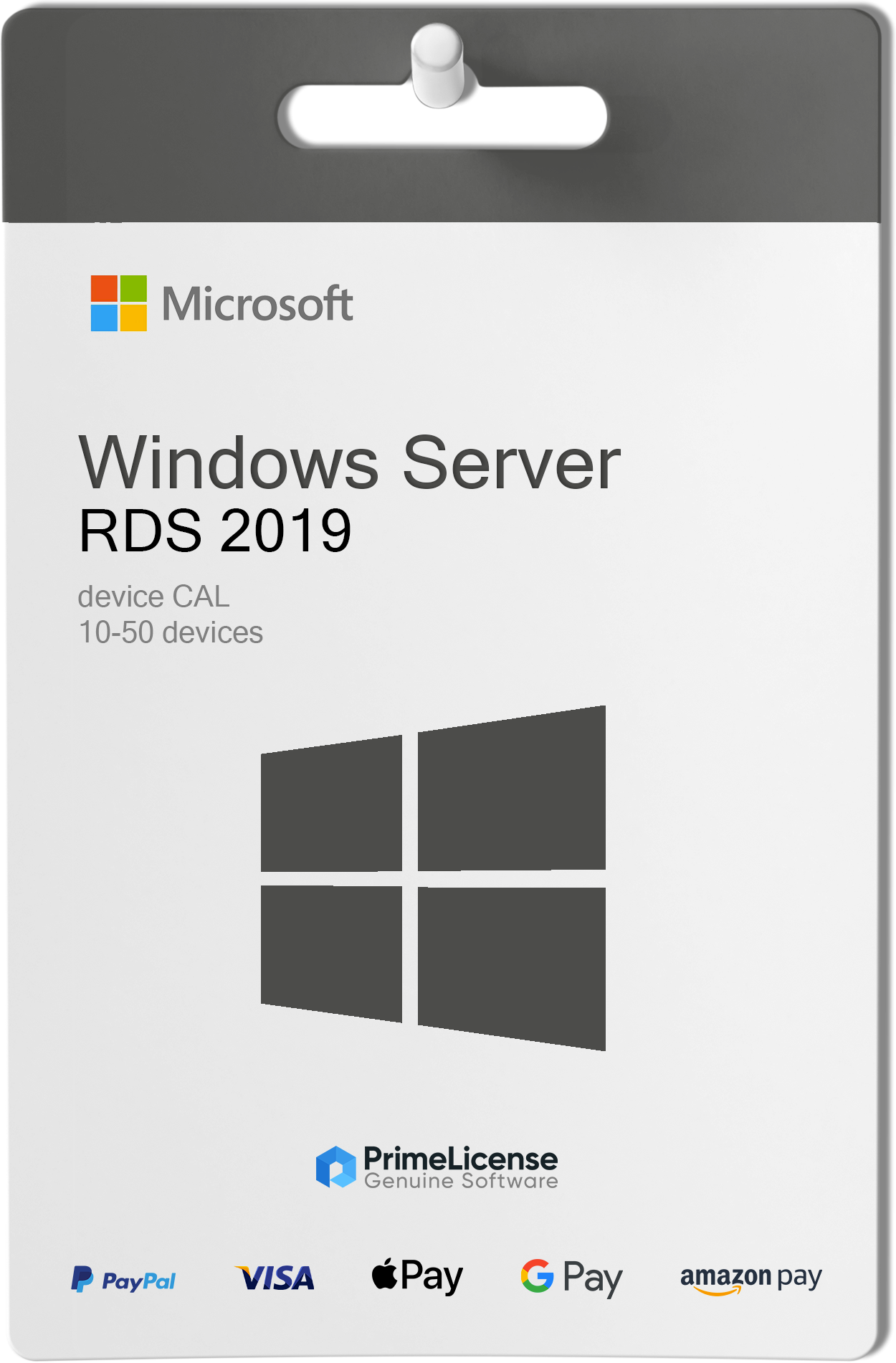
Microsoft Remote Desktop Services (RDS) 2019PLEASE NOTE: RDS CAL licences require technical activation in Server Manager. These licences are not the CAL versions required for Microsoft audits – a serial number is provided for activating user or device CALs in Windows Server environments. Windows Server Remote Desktop Services 2019 is a component of the Windows Server operating system that allows users to access applications and desktops remotely. It provides a secure and scalable solution for delivering virtual desktops, session-based desktops, and remote applications to users across different devices. Here is a detailed description of Windows Server Remote Desktop Services 2019: Remote Desktop Session Host (RDSH): RDSH is a role in Windows Server that enables multiple users to access Windows desktops and applications simultaneously on a Remote Desktop Session Host server. It allows for session-based desktop deployments where users connect to a shared server and run their applications within separate sessions. Remote Desktop Virtualization Host (RDVH): RDVH is a role in Windows Server that allows for the deployment of virtual desktop infrastructure (VDI). It enables users to connect to individual virtual machines running Windows and access a personalized desktop experience. RDVH supports both pooled and personal virtual desktop deployments. Remote Desktop Web Access (RD Web Access): RD Web Access is a web-based portal that provides users with access to RemoteApp programs, virtual desktops, and session-based desktops through a web browser. Users can launch applications and desktops without the need to install any additional software on their local devices. Remote Desktop Gateway (RD Gateway): RD Gateway acts as a secure gateway between remote clients and the internal network, providing a secure connection for remote desktop and application access. It uses the Remote Desktop Protocol (RDP) over HTTPS to establish encrypted connections and authenticate users before granting access to internal resources. Remote Desktop Connection Broker (RD Connection Broker): RD Connection Broker is responsible for load balancing and connection brokering in a Remote Desktop Services deployment. It ensures that users are connected to their existing sessions when reconnecting and distributes new connection requests across multiple session hosts for optimal resource utilization. Licensing: Remote Desktop Services requires appropriate licensing to ensure compliance. In the case of Windows Server 2019, you would need Remote Desktop Services Client Access Licenses (RDS CALs) to allow users or devices to access the server. There are both User CALs and Device CALs available, depending on the licensing model that suits your organization's needs. Overall, Windows Server Remote Desktop Services 2019 provides a comprehensive solution for remote access to applications and desktops, offering flexibility, security, and centralized management capabilities. It enables organizations to deliver a seamless and productive remote...68,90 £*Shipping: 0,00 £Secure redirect to the provider


-
How do enzymes work?
Enzymes work by speeding up chemical reactions in the body. They do this by lowering the activation energy required for a reaction to occur, making it easier for the reaction to take place. Enzymes achieve this by binding to the substrate molecules involved in the reaction and bringing them into close proximity, allowing the reaction to occur more quickly. Enzymes are specific to the reactions they catalyze, and their activity can be influenced by factors such as temperature, pH, and the presence of inhibitors or activators. **
-
How are enzymes named?
Enzymes are named based on the type of reaction they catalyze and the substrate they act upon. The names of enzymes typically end in "-ase" to indicate their enzymatic function. The first part of the name often reflects the substrate or the type of reaction the enzyme is involved in. For example, the enzyme that breaks down lactose is called lactase, and the enzyme that breaks down lipids is called lipase. Additionally, enzymes are often given a systematic name based on their specific function and the biochemical pathways they are involved in. **
-
Why are enzymes biocatalysts?
Enzymes are biocatalysts because they are able to speed up chemical reactions in living organisms without being consumed in the process. They do this by lowering the activation energy required for a reaction to occur, making it easier for the reaction to take place. Enzymes are highly specific in their action, targeting specific substrates and catalyzing specific reactions, which allows for precise control of metabolic processes in the cell. This specificity and efficiency make enzymes essential for the functioning of biological systems. **
-
What are key enzymes?
Key enzymes are proteins that catalyze specific chemical reactions within the body. They play a crucial role in regulating and speeding up metabolic processes, such as breaking down food for energy or building new molecules for growth and repair. Key enzymes are often involved in important biochemical pathways and are essential for maintaining overall health and homeostasis in the body. Their activity can be regulated by various factors, such as substrate concentration, pH, and temperature, and they are often targeted by drugs and therapies to treat various diseases and disorders. **


Do enzymes suffer when freezing?
Enzymes can be damaged or denatured when frozen, especially if the freezing process is not controlled properly. Ice crystals that form during freezing can disrupt the structure of enzymes, leading to a loss of their catalytic activity. However, some enzymes are more resistant to freezing than others, and certain techniques such as cryoprotectants or flash freezing can help minimize damage to enzymes during freezing. Overall, it is important to consider the specific enzyme and freezing conditions to determine the extent of damage that may occur. **
Do enzymes suffer from freezing?
Yes, enzymes can be damaged by freezing temperatures. When enzymes are frozen, ice crystals can form and disrupt the structure of the enzyme, leading to a loss of activity. Additionally, the process of freezing and thawing can cause enzymes to denature, further reducing their effectiveness. It is generally recommended to store enzymes at the appropriate temperature to maintain their stability and activity. **
Top-Angebote
Products related to - Enzymes:
-
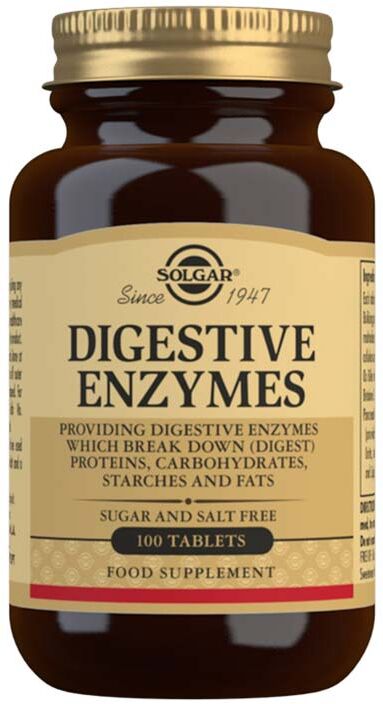
Solgar Digestive Enzymes 100 TabletsA unique proprietary complex, Solgar’s Digestive Enzymes provide support for your digestive system and for the absorption of food. Taking 1-3 of these premium, specialist supplements helps your body break down the food you eat and absorb nutrients. The digestive process is a complex one – the body breaks down the food we eat into nutrients. This is done with the help of digestive enzymes which are produced in the pancreas and small intestine. If we don’t have enough digestive enzymes, our body is not capable of breaking down food completely and nutrients won’t be absorbed efficiently, even if we follow a balanced, healthy diet. Chronic stress, low stomach acid and even food allergies can have an impact on the production of digestive enzymes – this is where Solgar comes in. Boasting ox bile, betaine, pancreatin, aspergillus oryzae, papain and pesin extract, Solgar’s supplement provides extra digestive support after meals. Each of its enzymes targets different food groups, ensuring a holistic approach to digestion. All Solgar products meet the industry-recognised “Gold Standard” for excellence. Made using naturally sourced ingredients and innovating since 1947. Key Benefits • Specialist combination of digestive enzymes to support the breakdown of proteins, carbohydrates, starches and fats • Helps your digestive system extract nutrients from your food • Designed to support your digestive system Ingredients Bulking Agents: (calcium carbonate, maltodextrin, microcrystalline cellulose, sucrose, lactose), Ox Bile Powdered Extract, Betaine HCI, Pancreatin 4X Concentrate (providing Protease, Amylase, Lipase), Powdered Peppermint (Mentha piperita) Leaf, Cross-Linked Cellulose Gum, Aspergillus oryzae, Amylase, Anti-caking Agents: (silicon dioxide, vegetable magnesium stearate), Papain, Glazing Agents: (hydroxypropylmethyl cellulose, vegetable glycerin (from palm kernel oil and coconut oil)), Pepsin Extract (contains milk).20,50 £*Shipping: 2,95 £Secure redirect to the provider
-
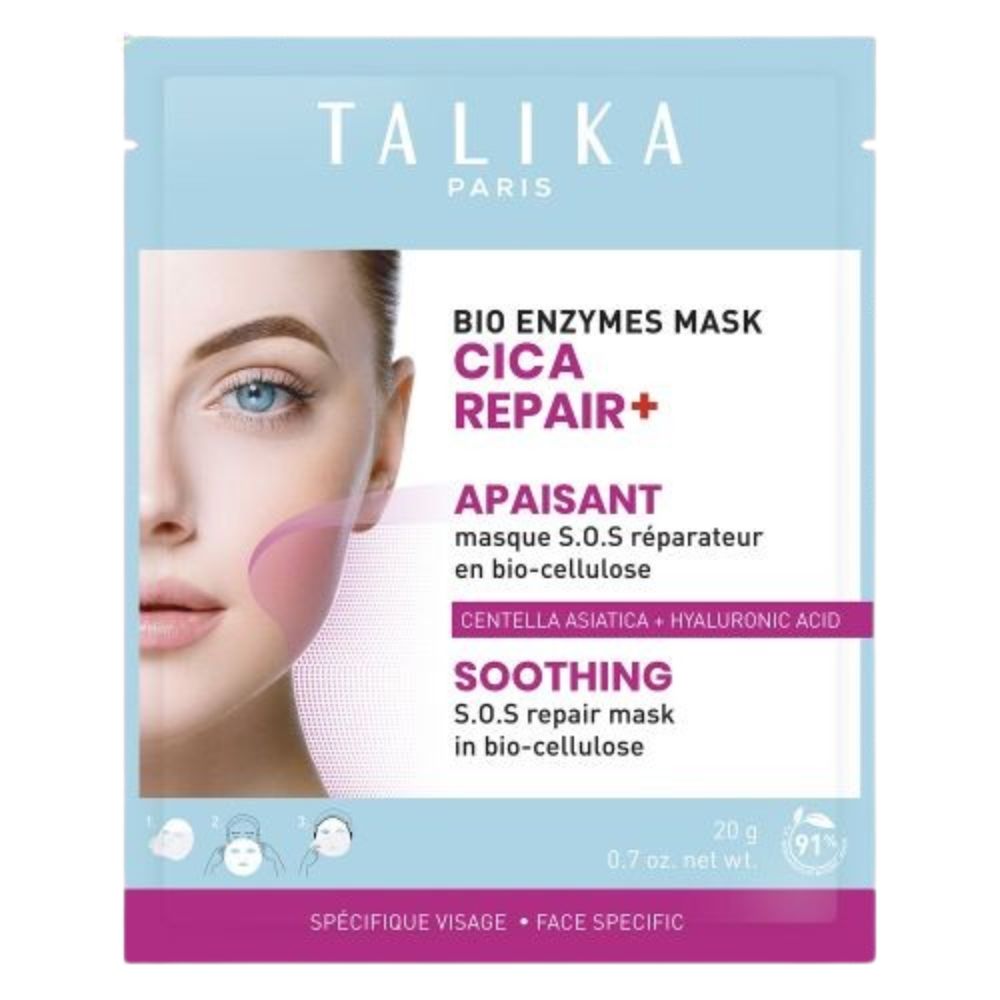
Talika Bio Enzymes Mask Cica Repair Soothing 20gA skin-care product. Transform your skincare routine with This product, designed for dry and irritated skin. Featuring Centella Asiatica and Hyaluronic Acid in innovative bio-cellulose. Accelerates skin healing by restoring the skin barrier. Provides optimal hydration with enhanced water circulation.7,52 £*Shipping: 5,34 £Secure redirect to the provider
-
Talika Bio Enzymes Brightening Sheet Mask 1 un.A skin-care product for dark spots and uneven skin tone. Is your skin is dull, also presenting dark spots?. Th e biocelulose mask adheres to your face like a second skin. Also, the fabric retains a large amount of active ingredients, optimizing their distribution on the skin. It's formulation contains niacinamide (vitamin B3), chamomile and aloe vera.7,46 £*Shipping: 5,34 £Secure redirect to the provider
-
Upcircle Powder To Foam Face Wash With Willow Bark and Papaya EnzymesExperience a refreshing and radiant complexion with the Upcircle Powder To Foam Face Wash With Willow Bark and Papaya Enzymes. This innovative, water-activated cleanser features a non-stripping, soap-free formula designed to cleanse and gently exfoliate the skin. Each bottle provides up to 200 uses, offering a lightweight yet highly effective solution for a daily skincare routine. Skin is left feeling balanced, revitalized, and smooth after every use.The 97% natural formulation is enriched with upcycled rice lees and willow bark to refine texture and even out skin tone. Papaya enzymes provide a light polishing effect, lifting away dead skin cells and daily impurities to reveal a brighter appearance. This vegan and cruelty-free product is made in South Korea and comes in a recyclable glass bottle, making it an ideal choice for those seeking sustainable beauty options.Suitable for all skin types, including sensitive skin, this cleanser is simple to use. Dispense a small amount into wet hands and add water to create a soft, luxurious foam. Gently massage the foam into the skin and rinse thoroughly for a clean, refreshed finish.Key BenefitsCleanses and gently exfoliates without stripping the skin using a soap-free, 97% natural formula that leaves the complexion refreshed and radiant - Smooths and evens skin tone with upcycled rice lees, willow bark, and papaya enzymes that lift dead skin cells and daily impurities - Offers a sustainable and long-lasting skincare solution with up to 200 uses per recyclable glass bottle of this vegan and cruelty-free cleanserIngredients:97% Natural Ingredients: Zea Mays (Corn) Starch, Sodium Cocoyl Isethionate, Sodium Lauroyl Glutamate, Diglycerin, Oryza Sativa (Rice) Lees Extract, Salix Alba (Willow) Bark Extract, Oryza Sativa (Rice) Powder, Camellia Sinensis Leaf Powder, Centella Asiatica Leaf/Stem Powder, Chamomilla Recutita (Matricaria) Flower Extract, Allantoin, Papain, Panthenol, Maltodextrin, Glucose, Glycerin, Aqua (Water), 1,2-Hexanediol.17,59 £*Shipping: 2,95 £Secure redirect to the provider
-
Are genetically modified enzymes the same as synthetic enzymes?
Genetically modified enzymes and synthetic enzymes are not the same. Genetically modified enzymes are produced by altering the genetic material of an organism, such as bacteria or yeast, to produce a specific enzyme. Synthetic enzymes, on the other hand, are created through chemical synthesis in a laboratory. While both types of enzymes can be used for various industrial and scientific applications, they are produced through different methods and have different origins. **
-
What are enzymes?
Enzymes are biological molecules that act as catalysts to speed up chemical reactions in living organisms. They are typically proteins that bind to specific molecules, called substrates, and help to convert them into different molecules. Enzymes are essential for various biological processes, such as digestion, metabolism, and cellular signaling. They are highly specific in their actions and can be regulated to control the rate of reactions in the body. **
-
How do enzymes work?
Enzymes work by speeding up chemical reactions in the body. They do this by lowering the activation energy required for a reaction to occur, making it easier for the reaction to take place. Enzymes achieve this by binding to the substrate molecules involved in the reaction and bringing them into close proximity, allowing the reaction to occur more quickly. Enzymes are specific to the reactions they catalyze, and their activity can be influenced by factors such as temperature, pH, and the presence of inhibitors or activators. **
-
How are enzymes named?
Enzymes are named based on the type of reaction they catalyze and the substrate they act upon. The names of enzymes typically end in "-ase" to indicate their enzymatic function. The first part of the name often reflects the substrate or the type of reaction the enzyme is involved in. For example, the enzyme that breaks down lactose is called lactase, and the enzyme that breaks down lipids is called lipase. Additionally, enzymes are often given a systematic name based on their specific function and the biochemical pathways they are involved in. **
Similar search terms for - Enzymes
-
Revolution Skincare Super Salicylic 2% Salicylic Acid & Fruit Enzymes regenerating serum for oily and problematic skin 30 mlRevolution Skincare Super Salicylic 2% Salicylic Acid & Fruit Enzymes, 30 ml, Skin Serums for Women, Does it feel as though your skin needs something more than just the care provided by a cream? The Revolution Skincare Super Salicylic 2% Salicylic Acid & Fruit Enzymes facial serum is the perfect product to enrich your skincare routine – it pampers the skin and delivers an intensive treatment. With its high concentration of active ingredients, the effect it has on your skin is far more pronounced and faster than with a face cream. Its liquid consistency makes application easier, as it is absorbed into the skin very well. Characteristics: evens skin tone protects skin regenerates the skin and prevents irritation Ingredients: vegan product How to use: Dab an appropriate amount of the serum gently into clean skin with your fingertips. Apply to the face, neck and chest.9,86 £*Shipping: 3,99 £Secure redirect to the provider
-
Microsoft Remote Desktop Services (RDS) 2019PLEASE NOTE: RDS CAL licences require technical activation in Server Manager. These licences are not the CAL versions required for Microsoft audits – a serial number is provided for activating user or device CALs in Windows Server environments. Windows Server Remote Desktop Services 2019 is a component of the Windows Server operating system that allows users to access applications and desktops remotely. It provides a secure and scalable solution for delivering virtual desktops, session-based desktops, and remote applications to users across different devices. Here is a detailed description of Windows Server Remote Desktop Services 2019: Remote Desktop Session Host (RDSH): RDSH is a role in Windows Server that enables multiple users to access Windows desktops and applications simultaneously on a Remote Desktop Session Host server. It allows for session-based desktop deployments where users connect to a shared server and run their applications within separate sessions. Remote Desktop Virtualization Host (RDVH): RDVH is a role in Windows Server that allows for the deployment of virtual desktop infrastructure (VDI). It enables users to connect to individual virtual machines running Windows and access a personalized desktop experience. RDVH supports both pooled and personal virtual desktop deployments. Remote Desktop Web Access (RD Web Access): RD Web Access is a web-based portal that provides users with access to RemoteApp programs, virtual desktops, and session-based desktops through a web browser. Users can launch applications and desktops without the need to install any additional software on their local devices. Remote Desktop Gateway (RD Gateway): RD Gateway acts as a secure gateway between remote clients and the internal network, providing a secure connection for remote desktop and application access. It uses the Remote Desktop Protocol (RDP) over HTTPS to establish encrypted connections and authenticate users before granting access to internal resources. Remote Desktop Connection Broker (RD Connection Broker): RD Connection Broker is responsible for load balancing and connection brokering in a Remote Desktop Services deployment. It ensures that users are connected to their existing sessions when reconnecting and distributes new connection requests across multiple session hosts for optimal resource utilization. Licensing: Remote Desktop Services requires appropriate licensing to ensure compliance. In the case of Windows Server 2019, you would need Remote Desktop Services Client Access Licenses (RDS CALs) to allow users or devices to access the server. There are both User CALs and Device CALs available, depending on the licensing model that suits your organization's needs. Overall, Windows Server Remote Desktop Services 2019 provides a comprehensive solution for remote access to applications and desktops, offering flexibility, security, and centralized management capabilities. It enables organizations to deliver a seamless and productive remote...68,90 £*Shipping: 0,00 £Secure redirect to the provider
-
Microsoft Remote Desktop Services 2025 (RDS)PLEASE NOTE: RDS CAL licences require technical activation in Server Manager. These licences are not the CAL versions required for Microsoft audits – a serial number is provided for activating user or device CALs in Windows Server environments. Microsoft Remote Desktop Services (RDS) licences for the 2025 edition represent a significant step towards innovation and efficiency in IT infrastructure management. Designed to optimise remote access and application virtualisation, these licences offer a range of advanced features and capabilities that can transform the way businesses operate. Innovation and Security Advanced Security: Windows Server 2025 introduces multi-layered security with features such as Credential Guard, which protects user credentials, and Hotpatch, which allows security updates to be applied without the need for a reboot. These innovations are key to preventing cyber-attacks and ensuring the protection of sensitive data13. HybridCloud Integration: The new RDS licences support simplified resource management in hybrid cloud environments, allowing businesses to easily connect local servers to Microsoft Azure. This integration unlocks the full potential of the cloud, improving scalability and flexibility of business operations13. Key Features Optimised Remote Access: RDS allows users to access desktops and applications from anywhere, improving productivity and collaboration across distributed teams. Thanks to application virtualisation, users can use software without having to install it locally46. Consistent User Interface: The user experience has been improved with an interface that reflects the Windows 11 style, making access to remote desktop services more intuitive. Features such as Bluetooth and Wi-Fi are now integrated, further facilitating connections34. Flexible Licensing: Client Access Licences ( CALs ) are available in various models, including per-device and per-user, allowing companies to choose the option that best suits their operational needs. This flexible approach facilitates the management of licences across multiple devices56. Product Capabilities RDS licences for Windows Server 2025 not only improve security and accessibility, but also offer significant opportunities to optimise operational costs. With centralised application management and simplified access to corporate resources, organisations can reduce downtime and improve overall efficiency. In summary, Microsoft Remote Desktop Services 2025 is a state-of-the-art solution for businesses looking to modernise their IT infrastructure while ensuring security, flexibility and high performance. With these licences, organisations can meet the challenges of modern remote working with confidence and preparedness.111,90 £*Shipping: 0,00 £Secure redirect to the provider
-
Microsoft Remote Desktop Services (RDS) 2022PLEASE NOTE: RDS CAL licences require technical activation in Server Manager. These licences are not the CAL versions required for Microsoft audits – a serial number is provided for activating user or device CALs in Windows Server environments. Windows Server Remote Desktop Services (RDS) 2022 is a powerful server-based virtualization technology that enables users to access Windows desktops, applications, and data remotely from various devices. It allows organizations to deliver a rich virtual desktop infrastructure (VDI) or session-based desktops to end-users, providing a flexible and secure remote computing solution. Key Features of Windows Server Remote Desktop Services 2022: Virtual Desktop Infrastructure (VDI): Windows Server RDS 2022 allows administrators to create and manage virtual desktops that can be accessed remotely by end-users. VDI enables personalized desktop experiences and allows users to access their virtual desktops from different devices, providing a consistent and productive environment. Session-based Desktops: In addition to VDI, RDS 2022 supports session-based desktops. Session-based desktops enable multiple users to share a single server operating system while maintaining separate user sessions. This allows efficient utilization of server resources and enables cost-effective desktop delivery. RemoteApp: With RemoteApp, administrators can virtualize and deliver individual applications from a server to end-user devices. RemoteApp provides a seamless application experience, allowing users to access specific applications without the need to access an entire desktop. This feature enhances flexibility and simplifies application management. RemoteFX: RemoteFX is a technology included in Windows Server RDS 2022 that enhances the remote desktop experience by providing high-quality multimedia and graphics capabilities. It enables smooth video playback, USB redirection, and multi-monitor support, making the remote desktop experience feel more like a local desktop environment. Remote Desktop Gateway: The Remote Desktop Gateway (RD Gateway) component in RDS 2022 allows secure remote access to internal network resources over the internet. It acts as a gateway server that provides a single point of entry for remote desktop connections, ensuring encrypted and authenticated access to virtual desktops or session-based desktops. Remote Desktop Web Access: RDS 2022 includes a web-based portal called Remote Desktop Web Access (RD Web Access) that allows users to access their virtual desktops, RemoteApp programs, and published resources through a web browser. It provides a convenient and platform-independent way for users to connect to their remote desktops and applications. Scalability and Load Balancing: Windows Server RDS 2022 supports scaling and load balancing to optimize resource utilization and ensure high availability. Administrators can distribute user sessions across multiple servers, ensuring efficient use of hardware resources and...102,90 £*Shipping: 0,00 £Secure redirect to the provider
-
Why are enzymes biocatalysts?
Enzymes are biocatalysts because they are able to speed up chemical reactions in living organisms without being consumed in the process. They do this by lowering the activation energy required for a reaction to occur, making it easier for the reaction to take place. Enzymes are highly specific in their action, targeting specific substrates and catalyzing specific reactions, which allows for precise control of metabolic processes in the cell. This specificity and efficiency make enzymes essential for the functioning of biological systems. **
-
What are key enzymes?
Key enzymes are proteins that catalyze specific chemical reactions within the body. They play a crucial role in regulating and speeding up metabolic processes, such as breaking down food for energy or building new molecules for growth and repair. Key enzymes are often involved in important biochemical pathways and are essential for maintaining overall health and homeostasis in the body. Their activity can be regulated by various factors, such as substrate concentration, pH, and temperature, and they are often targeted by drugs and therapies to treat various diseases and disorders. **
-
Do enzymes suffer when freezing?
Enzymes can be damaged or denatured when frozen, especially if the freezing process is not controlled properly. Ice crystals that form during freezing can disrupt the structure of enzymes, leading to a loss of their catalytic activity. However, some enzymes are more resistant to freezing than others, and certain techniques such as cryoprotectants or flash freezing can help minimize damage to enzymes during freezing. Overall, it is important to consider the specific enzyme and freezing conditions to determine the extent of damage that may occur. **
-
Do enzymes suffer from freezing?
Yes, enzymes can be damaged by freezing temperatures. When enzymes are frozen, ice crystals can form and disrupt the structure of the enzyme, leading to a loss of activity. Additionally, the process of freezing and thawing can cause enzymes to denature, further reducing their effectiveness. It is generally recommended to store enzymes at the appropriate temperature to maintain their stability and activity. **
* All prices are inclusive of VAT and, if applicable, plus shipping costs. The offer information is based on the details provided by the respective shop and is updated through automated processes. Real-time updates do not occur, so deviations can occur in individual cases. ** Note: Parts of this content were created by AI.